Designing Social Research
×
×
- Prijs:
- € 40,95
- Auteur:
- Norman Blaikie
- Uitgever:
- Polity Press
- Type boek:
- Paperback
- Editie:
- 3
- Gewicht:
- 664 gram
- EAN:
- 9781509517411
- ISBN:
- 9781509517411
- Conditie:
- Nieuw
- Beschrijving:
Designing Social Research – Norman Blaikie & Jan Priest
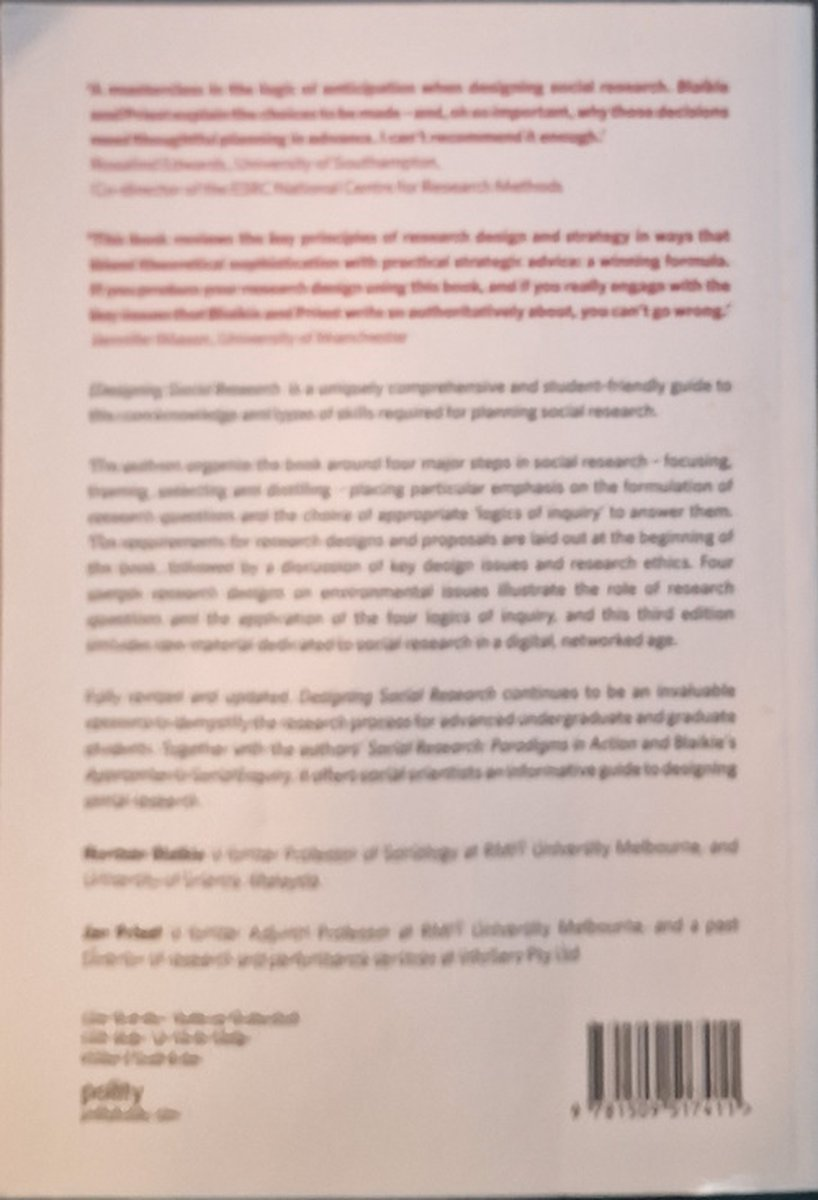
Designing Social Research by renowned authors Norman Blaikie and Jan Priest stands as a uniquely comprehensive, authoritative, and student-friendly guide dedicated to the core knowledge, methodological frameworks, and practical skills required for effective social research planning. This seminal textbook serves as an invaluable academic resource designed to demystify the complexities of the research process for advanced undergraduate students, postgraduate researchers, and social scientists alike.
The Four Core Pillars of Social Research Design
The structural framework of the book is meticulously organized around four major steps in social research. This systematic approach guides researchers through the critical phases of project development:
1. Focusing: Establishing the scope, boundary, and primary objectives of the study.
2. Framing: Contextualizing the study within existing theoretical paradigms and literature.
3. Selecting: Determining appropriate sampling methods, data collection strategies, and boundaries.
4. Distilling: Synthesizing complex data into meaningful, rigorous sociological insights.
Throughout these stages, Blaikie and Priest place a definitive emphasis on the precise formulation of research questions and the strategic selection of corresponding 'logics of inquiry' necessary to address them comprehensively.
Key Themes and Methodological Adaptations
The third edition of Designing Social Research introduces critical updates tailored to contemporary academic demands:
- Research Proposals and Design Requirements: The foundational criteria for constructing robust research designs and formal proposals are established in the introductory chapters.
- Research Ethics and Key Design Issues: The text provides a rigorous examination of the ethical considerations, institutional review requirements, and common pitfalls inherent in empirical social investigations.
- Applied Case Studies: To illustrate the practical application of the four logics of inquiry, the authors analyze four distinct sample research designs focused on contemporary environmental issues.
- Social Research in the Digital Age: Reflecting modern technological shifts, this edition integrates specialized material dedicated to conducting social research within a digitalized, networked society.
Academic Synergy and Companion Texts
As a cornerstone of sociological methodology, Designing Social Research is part of a broader epistemological framework established by the authors. For an exhaustive understanding of social science methodology, it is ideally read in conjunction with:
- Social Research: Paradigms in Action (Blaikie & Priest)
- Approaches to Social Enquiry (Blaikie)
Together, this triad of texts equips researchers with the theoretical depth and practical toolkit necessary to execute high-impact empirical studies.